
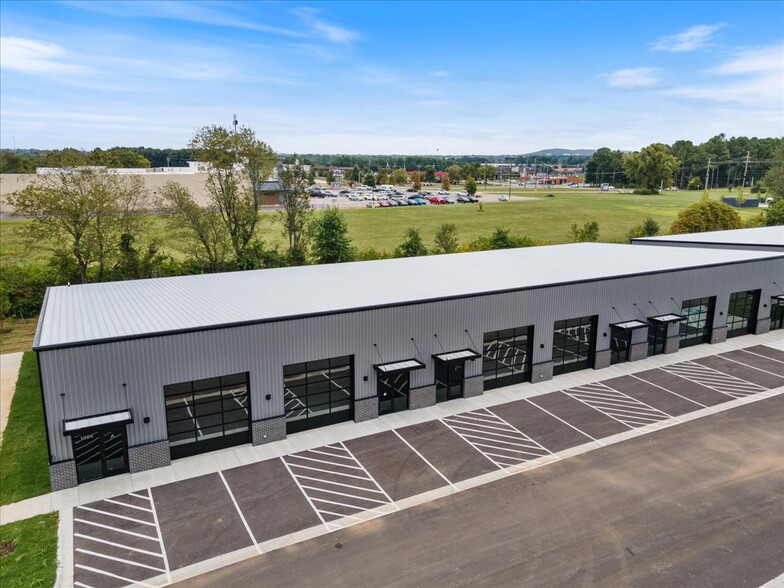
“Flex space is an emerging real estate niche that combines the strengths of self storage, light industrial, and office into one highly adaptable property type,” according to James Reid, Founder of FlexSpace Nation, a growing community of developers, investors, and operators facilitating growth and deal flow in the flex space niche.
Reid continues, “It’s especially relevant to self storage owners looking to increase tenant value, diversify income, and grow their holdings with high-yield assets that appeal to long-term business users.”
Defining the Asset Class
While terms like “small bay warehouse,” “flex space industrial,” and “flex space business centers” still appear in listings and industry conversations, the industry is unifying around a single, clear name: flex space. Just as we evolved from “mini storage” to “self storage,” it’s time to bring consistency and clarity to this fast-growing asset class, which sometimes flies under the radar because of its varied labels. In the past, depending on the market, broker, or banker, it may be categorized under light industrial, small bay warehouse, or even commercial condos.
“Standardizing the term ‘flex space’ will make it easier for investors, brokers, developers, lenders, and tenants to speak the same language. That will accelerate adoption, education, and deal flow across the industry – which are foundational concepts of FlexSpace Nation,” says Reid.
The advent of flex space is a good development for self storage owners. “I believe self storage owners should pay close attention because flex space is not a departure from our industry, it’s closely akin to it – rooted in many of the same development principles but built for a more dynamic use case,” according to Sarah Swingler, Director of Business Development at MakoRabco, self storage construction experts and strategic partners with FlexSpace Nation. “Even though permitting and land use can vary by market, much of the design-build approach feels familiar to storage developers.”
“Flex space adds the advantage of deeper tenant engagement and a robust revenue profile, giving owners a strategic way to strengthen both existing facilities and new developments,” Swingler adds.
Rising Demand for Flex Space
Flex space caters to our best self storage customers: commercial tenants, the small businesses that stay longer, adhere to lease terms, and reliably pay the rent. According to Steve Garrison, Managing Member of Personal Warehouse, average vacancy for flex space are at record lows of 3.4% nationwide. “Demand is sky-high…Virtually everything is leased up,” says Garrison.
According to Adrian Ponsen, National Director for Industrial Market Analytics at CoStar, supply of flex space grew “less than 3% over the past 10 years. For comparison, employment industries that use [flex space] intensively, including construction, wholesale trade…has increased by 20% over the same period. Fitness-related tenants such as cross fit gyms and pickleball operators also have increasingly leased the minimal supply of available [flex space] over the past decade.”
Clearly, supply is not keeping up with demand.
“From an investment standpoint, (flex space) offers a combination of stability (high occupancy, essential local tenants) and growth (rent upside, high demand) that’s hard to find elsewhere in real estate right now…If you need [flex space] for your business, you’re facing stiff competition, and if you own one, you’re in a good position…[This] boom has legs. The same forces that made it boom – diverse demand, limited supply – are still in play and not easily or quickly changed,” concludes Garrison.
Self storage owners are in an excellent position to take advantage of this market opportunity. “Flex space gives self storage owners a practical path to expand their portfolios, meet rising demand for small-business operating space, and future-proof their investments,” says Dennis Buehrle, Director of Construction at BBi Constructors, a nationally known general contractor specializing in self storage and flex space, also a strategic partner of FlexSpace Nation
“Flex space puts you in a position to help small businesses grow by offering them the space they need as they scale. When they grow out of their drive-up 10×20 self storage unit, they can move right into your flex space, and you don’t lose a customer,” Buehrle concludes.
Self storage and flex space “create a natural referral opportunity,” according to the Founder of Magellan Architecture, Pedro Castro, who designs flex space and is actively developing and investing in the asset class, and is a strategic partner with FlexSpace Nation. He points out, “Flex space can attract businesses that might also need self-storage, expanding your customer base.”
“Both cater to businesses, contractors, and individuals with unique needs. By partnering flex space with self storage, you create a comprehensive solution, increasing appeal and revenue potential,” says Castro.
“At MakoRabco, we’re seeing an uptick in developers pursuing hybrid sites that combine self storage and modern flex space into one unified project,” according to Swingler. “The reason is simple: demand is strong, tenants stay longer, and the product serves multiple market segments with one highly efficient steel-building platform.”
How Flex Space is Used
“At its core, flex space serves small to mid-sized businesses that need several types of space in one location, typically a blend of office and warehouse space,” says Reid. “Unlike traditional office buildings or industrial complexes, a flex facility allows tenants to customize the balance – often around 10% office with the remainder used for storage, equipment, inventory, or light manufacturing. Flex spaces feature roll-up doors and easy vehicle access. Tenants can even opt for private restrooms, retail storefronts, studio space, and other features and amenities, depending on their needs and the development’s design.”
Emphasizing how tenants use the space, Swingler says, “I see flex space as the natural convergence of self storage, light industrial, and small-business operations. Unlike traditional storage, flex space is designed for activity – not just passive storage.”
Despite the naming differences, the core value is the same: flex space is highly adaptable space that supports the growing needs of small businesses and entrepreneurs. Converging on one name, “flex space”, will help owners and investors identify opportunities more effectively, enhance overall market awareness, facilitate consistent brokerage listing and access to financing, and elevate the asset class.
“For self storage operators, adding flex space to your unit mix means something powerful: you can retain your best tenants longer,” says Reid, FlexSpace Nation Founder. “Business users – such as contractors, ecommerce sellers, or local service providers – often begin with traditional storage units but quickly outgrow them. Rather than losing these customers, owners with flex inventory can graduate them into larger spaces within the same property ecosystem.”
Beyond customer retention, flex space offers operational advantages. With tenants typically on 1- to 5-year leases – rather than month-to-month – the revenue is more predictable. And most leases are structured as triple net (NNN), with tenants covering expenses like maintenance, insurance, and taxes. In contrast, self storage owners bear these costs directly.
Flex Space Construction and Facility Expansion
Flex space is also attractive from a development and entitlement standpoint. “When you want to expand your facility,” Buehrle says, “flex space will likely be a lot easier to pass through Planning and Zoning.”
The “flexibility” of this asset extends to construction as well. Reid explains, “Flex space buildings are typically built with clear span interiors – wide open spaces unobstructed by columns or load-bearing walls. This makes it easy to add or remove demising walls as tenant needs evolve. From a cost perspective, developers can deliver vanilla shells and charge tenants for custom buildouts, increasing ROI while minimizing upfront expense.”
“From a construction and engineering perspective,” according to Swingler, “flex space builds on the same strengths that have made self storage so stable and scalable: repeatable design, predictable cost structures, and efficient steel-building systems.
“But it goes further by offering larger units, higher clearances, integrated power and utilities, roll-up access, and flexible layouts that attract a tenant base increasingly underserved by traditional industrial real estate,” Swingler says.
No Rental Rate Compression in Flex Space
“Another key benefit: market independence,” says Reid. Unlike self storage, where REITs influence pricing across metro areas and industry-wide, the flex space market is highly localized. This protects rents from downward pressure caused by aggressive national players and allows for more confident underwriting.
Flex also naturally aligns with today’s workforce and business trends. “As ecommerce expands and service-based businesses become more nimble,” says Reid, “owners and solopreneurs are looking for affordable, right-sized real estate that supports operations without the overhead of traditional retail, office, or warehouse space. Their websites are their storefronts. They need flexible real estate that adapts as they grow.”
From electricians to Etsy sellers, small businesses increasingly need more than a garage or a 10×10 storage unit. By offering flex space, self storage operators can be the long-term real estate partner for these entrepreneurs, supporting them from startup to scale-up, and earning stronger revenue in the process.
Join the Movement
“FlexSpace Nation is more than a platform,” says Cody Payne and Michael Tran, Founders of Flex Parks USA and strategic partners with FlexSpace Nation. “It’s a strategic gateway for self storage investors to expand and diversify their portfolio with the backing of a proven team and unmatched resources.”
Want to learn more, or expand your portfolio by adding flex space? Interested in becoming a FlexSpace Nation strategic partner? Join the movement at FlexSpaceNation.com.
This article was originally published by Self-Storage News Magazine, the official publication of the Texas Self Storage Association.