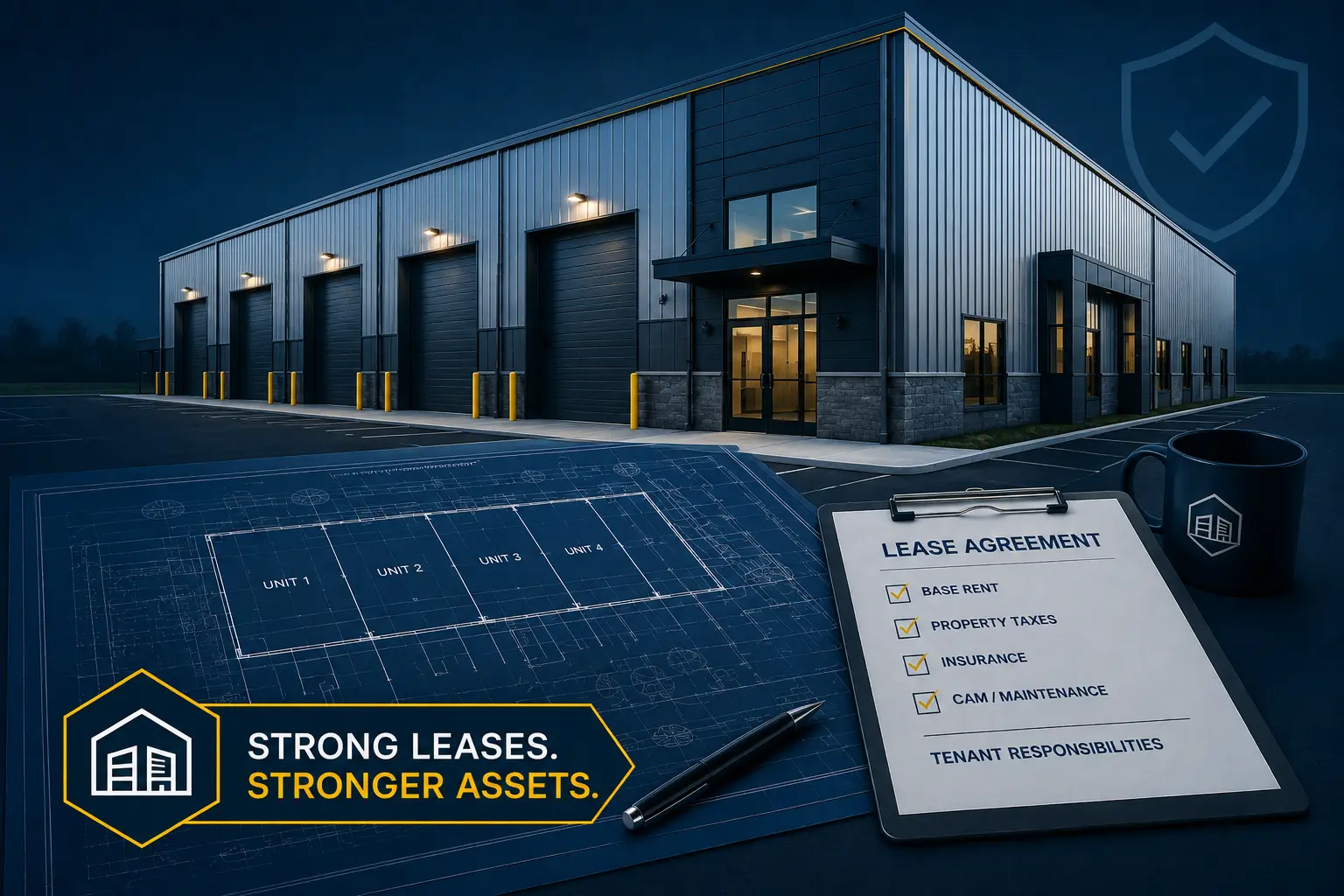
Most people evaluating flex space start with the physical product: the roll up doors, the office buildout, and the clear span interiors. That part makes sense. The building is easy to picture. What’s harder to see, and what matters just as much to your returns, is what happens after a tenant signs. How the lease is structured determines whether flex space behaves like commercial real estate or gets managed like a storage facility. Those are two very different businesses. If you’re not clear on the distinction yet, start with what flex space is as an asset class. The lease structure only makes sense in that context.
Lease structure is one of the most important differentiators between flex space and traditional self storage. It’s also one of the primary reasons flex space can produce stable, predictable income with stronger expense control than many owners expect when they first start looking at the numbers. This article walks through how flex space leases work, why the triple net structure is so common, what month to month leasing actually looks like in this asset class, and how smart lease language protects the property and the owner.
What Lease Types Are Used in Flex Space?
Flex space doesn’t use a single lease structure across the board, but one model is especially common: the triple net lease. The others, modified gross and shorter term commercial leases, exist, but they’re generally strategic tools rather than the default. Understanding when each structure appears tells you a lot about how a project is performing and where it sits in its development cycle.
The Triple Net (NNN) Lease
Under a triple net lease, the tenant pays base rent plus their share of property taxes, property insurance, and maintenance and operating expenses, often including CAM. The landlord collects base rent that is more insulated from expense volatility. Recoverable operating expenses are generally passed through to tenants, helping protect the owner from much of the volatility associated with rising taxes, insurance, and common area costs.
This is a common structure across many flex space developments, and it’s one of the primary reasons flex space behaves more like commercial real estate than traditional storage. When recoverable expenses are passed through, NOI can track more closely with rental income. That predictability matters for underwriting, valuation, and long term asset performance.
The Modified Gross Lease
Some flex space operators, especially in early stage or mixed use projects, use modified gross leases. Base rent includes some operating expenses, but tenants may still pay utilities or partial CAM, and expenses above a certain threshold get passed through. It’s a more flexible arrangement that can lower the barrier to entry for tenants who aren’t yet ready for a full commercial lease.
Modified gross structures tend to appear when a project is still leasing up, or when the tenant mix includes smaller, less established businesses. They’re often used strategically rather than permanently. As a project stabilizes, operators may migrate toward NNN when the market and tenant profile support it.
Short Term and Hybrid Commercial Leases
In limited cases, flex space may offer 12 to 24 month leases, rolling renewals, or early termination options. These are still commercial leases, not self storage rental agreements, and they maintain defined operational controls. They show up most often in markets where flex space demand is newer and tenants haven’t yet committed to longer terms, or for project based and seasonal operators who need documented flexibility.
Why Pure Gross Leases Are Less Common in Flex Space
True gross leases, where the landlord absorbs all operating expenses, are less common in stabilized flex space projects for a straightforward reason: they shift expense risk to the owner and can weaken the investment thesis. NOI becomes harder to predict, inflation can cut into returns, and the operational efficiency that makes flex space attractive as an asset class may erode. Many experienced flex developers phase out gross structures as the market allows.
Why NNN Leases Dominate, and What That Means for You
The lease structure you use directly impacts cash flow, risk allocation, and the kind of tenants you attract. NNN isn’t commonly used because it’s the easiest lease to explain. It’s common because it can align tenant responsibilities with long term asset performance in a way other structures may not.
Because recoverable expenses are passed through, your NOI can more closely mirror rental income. That can make underwriting simpler and reduce exposure to inflation and rising operating costs. When property taxes or recoverable maintenance costs increase, properly drafted pass through provisions can shift much of that increase to the tenant.
Flex space tenants can also become operationally invested in their location. These are businesses, not individuals. Lease terms may range from one year to several years, with established tenants often committing to 3 to 10 year terms. They may obtain occupancy permits, modify the space, and integrate the location into their operations. That investment creates natural retention, not because the lease alone locks them in, but because leaving can be operationally expensive. Contrast that with self storage, where a tenant may be gone in 30 days.
And compared to self storage, NNN flex space can involve lower day to day management intensity in certain respects. There is generally no lien processing, auction process, or similarly high churn customer base. If you want a deeper look at how the two asset classes compare from an operational standpoint, the self storage vs. flex space comparison covers the key differences in positioning and investment profile.
Base rents in NNN flex may appear lower than in gross lease structures, but net performance may be stronger once recoverable expenses and rent escalations are considered. Expense pass throughs and built in rent escalations can help close the gap.
Can Flex Space Be Month to Month Like Self Storage?
This is one of the most common questions from self storage owners exploring flex space. Flex space can technically be leased month to month, but generally not in the same way storage operators are used to.
Flex space tenants operate businesses on site. They may hold occupancy permits and licenses, carry insurance specific to their operations, and modify the physical space. That operational reality can make true month to month leasing impractical and risky. A tenant who has built out a suite and obtained business approvals is unlikely to treat the space as a temporary 30 day commitment. A landlord who structures the lease that way may give up more control than they gain in flexibility.
The legal distinction matters here too. Self storage rental agreements may be governed by state specific lien statutes when the facility and rental arrangement qualify under those laws. Flex space occupied by a business is generally governed by commercial lease law and is tied to zoning, insurance, and permitted use compliance. Storage lien remedies should not be assumed to apply to a commercial tenant operating a business from the space. Because requirements vary by state and municipality, owners should have lease documents and enforcement procedures reviewed by qualified local counsel.
That said, flexibility isn’t off the table. Shorter initial terms, 12 months, for example, can be viable when paired with renewal options and built in rent escalations. Early termination clauses can give tenants a documented exit path without handing over operational control. The goal is structured flexibility, not open ended month to month leasing. The asset preserves its value; the tenant gets a workable term.
Permitted Uses and Lease Restrictions: How Lease Language Protects the Asset
Lease restrictions in flex space aren’t a drawback; they’re a risk management tool. And they’re one of the clearest places where flex space diverges from how storage is managed. The tenant mix in a well run flex space project is diverse: contractors, e commerce operators, fitness studios, technology companies, professional service firms. That diversity is a strength, and the range of flex space tenants is part of what makes the asset class resilient. But it also means your lease language has to be intentional about what uses it permits and what it doesn’t.
Uses That May Require Restrictions or Additional Approval
Automotive repair and body work, welding or open flame operations, heavy manufacturing, hazardous materials, and high impact mechanical work may be restricted or subject to additional owner approval in flex space leases. These decisions aren’t arbitrary; they are often driven by insurance requirements, zoning limitations, fire and life safety considerations, building systems, and compatibility with neighboring tenants. A tenant who wants to run a body shop in your suite isn’t just a leasing consideration. The use may also create insurance, code, environmental, and neighbor related concerns.
Clear restricted use and approval language helps prevent those issues before they start. It can also give the owner documented grounds for enforcement or termination if a tenant steps outside the permitted use, something that is handled very differently in self storage.
Tenant Responsibility Clauses
Strong flex space leases require tenants to obtain and maintain the business licenses, occupancy approvals, insurance coverage, and inspections applicable to their specific operations. Primary responsibility for business specific compliance should sit with the tenant, while the owner remains responsible for the obligations tied to the property and building. This allocates operational risk more appropriately and creates clear enforcement options when a tenant fails to meet their obligations.
Most flex leases also require tenants to confirm that their intended operation is permitted under local zoning before signing and to obtain the approvals specific to their use. At the same time, the owner should understand the property’s underlying zoning, occupancy limitations, building approvals, and the broader range of uses being marketed. A well drafted lease makes each party’s responsibilities explicit.
What Good Lease Language Looks Like in Practice
Define permitted uses specifically, not broadly. Reference your insurance carrier’s requirements as part of the restriction language. Require proof of compliance, not just a tenant’s assurance, before occupancy begins. Include enforcement and termination rights tied to permit revocation, insurance lapse, or use violations. And don’t copy self storage lease language. It wasn’t written for this asset class, and it doesn’t protect you the same way. Lease documents should be prepared or reviewed by qualified counsel familiar with the applicable state and local requirements.
Lease Structure Is What Makes Flex Space Operate Like Commercial Real Estate
For self storage owners looking at flex space for the first time, the building often feels familiar. The roll up doors, the steel frame, and the construction model all feel familiar. What’s different is the operating model, and that difference starts with the lease. NNN leases, commercial tenant controls, permitted use restrictions, and defined lease terms aren’t just paperwork details. They’re mechanisms that can support a stable, scalable asset with more predictable income and longer term tenant relationships. If you’re still working through whether the shift to flex space makes sense for your portfolio, this overview of what self storage owners should know about flex space is a good place to continue.
Lease structure is where operational discipline begins, and where asset protection is strengthened.
Common Questions About Flex Space Leases
What type of lease is most common in flex space?
Triple net (NNN) leases are one of the most common structures in flex space. They pass defined operating expenses to the tenant, help create more predictable NOI, and align with the commercial real estate operating model flex space follows.
Why are NNN leases preferred for flex space?
Because they can help insulate the owner from expense volatility. Property taxes, insurance, and recoverable maintenance expenses are passed through to the tenant under properly drafted provisions, so NOI may track more closely with rental income. That predictability can make underwriting simpler and returns more reliable.
Can flex space be leased month to month?
Yes, but it is generally not structured the way self storage operates. Flex space tenants run businesses on site, may hold permits and licenses, and often modify the space. True month to month leasing can reduce the owner’s operational control. Shorter initial terms with renewal options are often a more workable alternative.
How long are typical flex space lease terms?
Lease terms commonly range from 1 to 10 years depending on tenant maturity, suite improvements, project strategy, and market conditions. Shorter terms may begin around one year, while established tenants investing in buildouts and approvals may commit to 3 to 10 year terms.
What uses are often restricted in flex space leases?
Automotive repair, welding, heavy manufacturing, hazardous materials, and high impact mechanical work are often restricted or require additional approval. The decision typically depends on insurance requirements, local zoning, fire and life safety considerations, building systems, and compatibility with neighboring tenants. Clear restriction and approval language protects the property and gives the landlord documented enforcement rights.
FlexSpace Nation is growing a community of developers, investors, operators facilitating growth and deal flow in the flex space niche