For many developers, the initial conversation around flex space starts with the development itself: finding the right site, determining how much square footage the market can support, establishing a construction budget, securing financing, and ultimately getting buildings out of the ground. Those early decisions are explored further in Selecting the Best Site for Flex Space Property Development: Insights from Developers and Owners and The Importance of Conducting a Quality Market Analysis Before Developing Flex Space Facilities.
But for investors who intend to own their properties long term, the development is only the beginning.
A successfully developed and stabilized flex property can become an income-producing commercial real estate asset that continues working for its owner for years—or even decades. Rental income can support operating expenses and debt service. Loan principal can be reduced over time. Property values may increase as rents and net operating income grow. And the equity created in one project may eventually help fund the next. For additional context on the forces that can influence long-term value, see 10 Economic Factors Influencing Flex Space Property Values in 2025.
That is where flex space begins to move from being a development opportunity to becoming part of a long-term wealth-building strategy.
The Development Is Only the First Step
Building a flex project creates a physical asset. Building wealth through that project depends largely on what happens afterward.
Once the property begins leasing, tenants generate revenue that can be used to pay operating expenses, service debt, and provide cash flow to ownership. Assuming the project performs as anticipated, each year of operation can also strengthen the owner’s financial position.
Unlike an investment that produces a return only when it is sold, an income-producing property can potentially create value throughout the ownership period.
For a long-term flex owner, that value can come from several places:
- Ongoing rental income
- Loan principal reduction
- Growth in net operating income
- Property appreciation
- Increasing ownership equity
- Refinancing opportunities
- Future expansion or redevelopment
- An eventual sale or transfer of the property
These benefits do not occur automatically, and every property performs differently. But together, they help explain why commercial real estate has historically played such an important role in long-term investment strategies.
Cash Flow Creates the Foundation
The most visible benefit of owning a stabilized flex property is rental income.
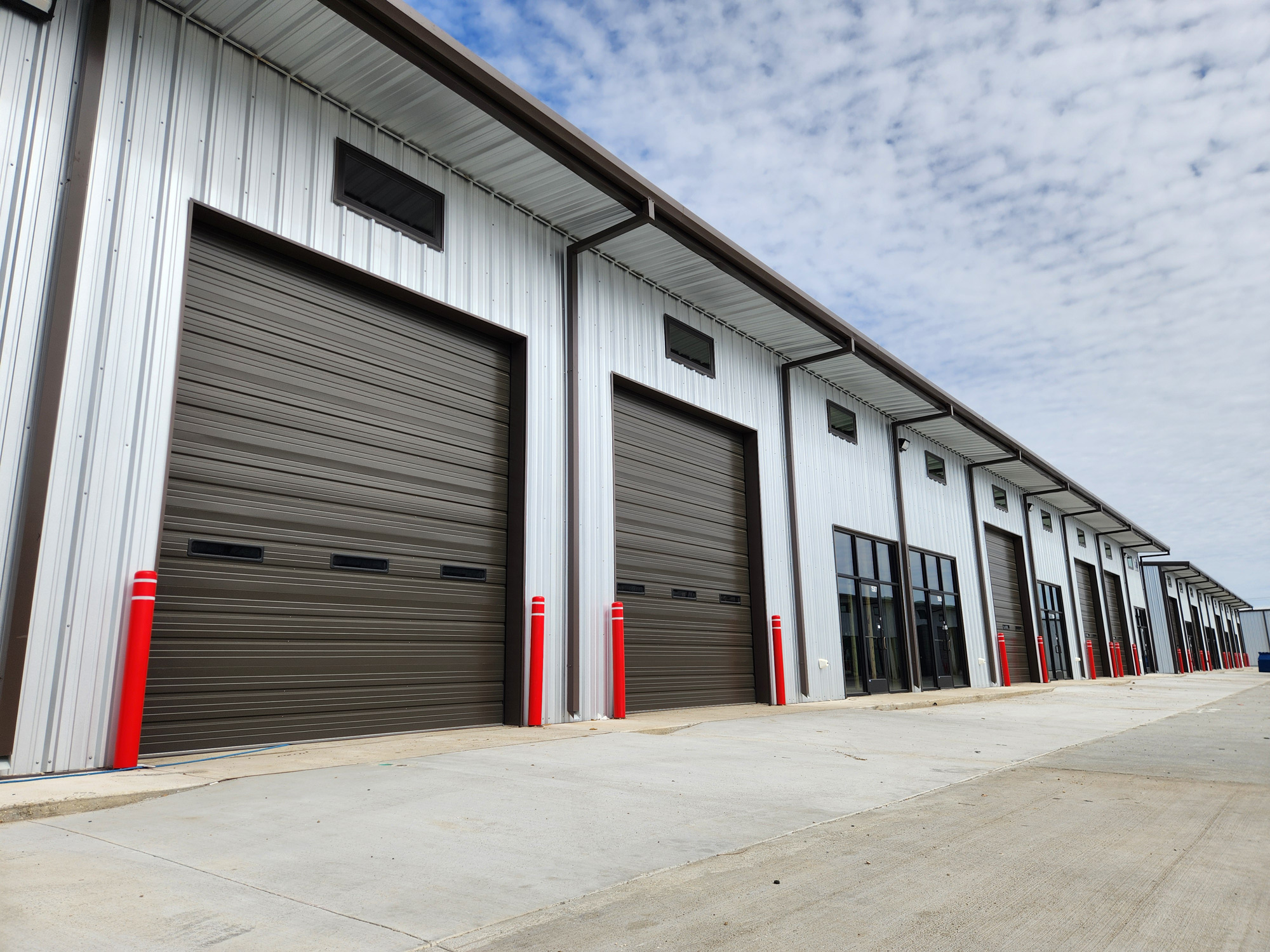
Flex tenants may include contractors, service businesses, e-commerce companies, tradespeople, light manufacturers, distributors, small businesses, and other users that need a combination of warehouse, office, showroom, or operational space. Readers who are newer to the asset class may also find What Is Flex Space? How a New Asset Class Emerged, and Why It Matters helpful for understanding how flex space has evolved and who it serves.
When a project is properly aligned with its market, that tenant demand can create recurring rental revenue. A deeper look at demand, competition, and investment conditions is available in Conducting a Comprehensive Market Analysis for Successful Flex Space Property Investment.
From that revenue, the ownership entity pays property expenses, including items such as insurance, taxes, repairs, maintenance, management, utilities when applicable, and debt service.
What remains can provide cash flow to the owner.
But cash flow should not be viewed only as the money distributed each month or quarter. Some of the property’s revenue may also be contributing to something less visible but equally important: the continued growth of the owner’s equity position.
Tenants Can Help Build Owner Equity
Most commercial development is financed using a combination of debt and owner equity.
As the property’s loan payments are made, a portion of those payments may reduce the outstanding principal balance. Over time, the difference between the value of the property and the amount owed against it can grow.
In simple terms, the owner’s equity may increase even if the property value remained unchanged.
Consider a flex property that has reached stabilization and is consistently producing enough revenue to support its financial obligations. As years pass and debt is reduced, ownership controls an increasingly larger portion of the underlying asset.
That equity can become a meaningful source of long-term wealth.
It also creates options.
The owner could continue holding the property, sell it, refinance it, transfer it to another generation, or potentially use the equity position as part of a broader portfolio strategy.
Increasing NOI Can Create Additional Value
Debt reduction is only one way equity can grow.
Commercial real estate is commonly valued based in large part on the income the property produces. That makes net operating income, or NOI, an especially important number for long-term owners. For a more detailed framework around NOI, expenses, and risk, see Creating Sound Financial Projections for Flex Space Acquisitions in 8 Steps.
NOI is essentially the income generated by the property after operating expenses but before financing costs and certain other items.
If rental rates increase, occupancy improves, expenses are managed effectively, or additional rentable space is created, NOI may increase.
And when NOI increases, the value of an income-producing property may increase as well, depending on prevailing capitalization rates and market conditions.
This is one of the reasons the decisions made early in development are so important. Those early decisions are also the focus of The 5 First Steps in Flex Space Development.
A project that is overbuilt for its market, difficult to lease, expensive to maintain, or poorly configured may struggle to achieve the NOI originally anticipated.
Conversely, a well-planned project that serves a real tenant need can create a stronger foundation for long-term performance. Evaluating the Viability of Flex Space Projects examines how market demand, financial feasibility, and location work together before development.
Refinancing Can Turn Equity Into Investment Capacity
One of the most powerful concepts in long-term real estate ownership is that an investor does not always have to sell an asset to benefit from the value created within it.
Once a property is stabilized and has accumulated sufficient equity, the owner may have an opportunity to refinance.
A refinance can potentially replace the existing loan with new financing based on the property’s current performance and value. Depending on the circumstances, the owner may be able to access a portion of the equity that has accumulated in the property.
That capital might then be used for another investment.
For example, a developer could:
- Develop the first flex project.
- Lease and stabilize it.
- Increase the property’s income over time.
- Build equity through principal reduction and appreciation.
- Refinance the stabilized asset.
- Use available capital toward another site or development.
The process can then potentially be repeated.
This is how one successful property may begin contributing to the creation of a larger real estate portfolio.
From One Property to a Portfolio
The long-term wealth opportunity becomes especially interesting when a developer stops thinking exclusively in terms of individual projects.
One property can produce income.
Several properties can create a portfolio.
A portfolio of well-performing flex assets may provide diversified tenant income, growing equity across multiple properties, additional borrowing capacity, and greater flexibility in deciding when to buy, sell, refinance, or develop.
That does not mean every developer needs to become a large institutional owner.
For some investors, the goal may simply be to own two or three properties that generate dependable income.
Others may want to build a regional portfolio.
Some families may ultimately view their flex properties as assets that can be transferred to the next generation.
The appropriate strategy depends on the owner’s objectives, capital structure, risk tolerance, and investment horizon.
The important point is that the exit strategy does not always have to be an immediate sale.
Long-Term Ownership Changes Development Decisions
When a developer plans to hold a project rather than sell it shortly after completion, certain development decisions may be viewed differently.
Construction cost still matters. But so do durability, long-term maintenance, tenant flexibility, operating efficiency, and the ability of the property to remain competitive. Understanding Flex Space Construction Costs provides additional context on how cost drivers and design decisions can affect ROI and leasing demand.
An owner planning to hold a building for twenty years may evaluate certain materials differently than someone planning to sell immediately after stabilization.
The same applies to site planning. The Flex Space Construction and Zoning Guide covers many of the planning, zoning, design, and construction considerations that can influence long-term adaptability.
- Can additional buildings be added later?
- Can unit sizes be changed as market demand evolves?
- Is there enough parking?
- Does circulation work for a variety of business users?
- Are the buildings positioned to accommodate future tenant types?
Flexibility within the development itself can create additional flexibility for the owner.
That is especially important because the businesses leasing flex space today may not be exactly the same businesses leasing it ten or fifteen years from now.
Expansion Can Create Another Layer of Growth
Some flex developments are intentionally constructed in phases.
Rather than developing every available acre immediately, an owner may build an initial phase, establish tenant demand, and preserve the ability to expand later.
If the first phase performs well, future phases may provide an opportunity to increase the property’s total rentable square footage and NOI.
This strategy can also allow the developer to respond to actual market performance rather than relying entirely on projections made before construction begins.
A successful first phase may demonstrate demand.
The next phase can then be designed using lessons learned from real tenants, actual leasing velocity, preferred unit sizes, and achieved rental rates.
For long-term owners, undeveloped land within an existing successful property can itself become a valuable future opportunity.
Wealth Building Still Starts With the Fundamentals
Flex space can offer compelling long-term ownership opportunities, but no property type automatically creates wealth.
The investment still has to work. A disciplined due diligence process helps organize that evaluation; A Comprehensive Guide to Flex Space Due Diligence: Key Steps & Market Trends provides a broader checklist of the legal, market, and investment factors to review.
Successful projects generally begin with fundamental questions:
- Is there sufficient tenant demand in the market?
- Is the site appropriate for flex?
- Does zoning and land use support the intended development?
- How much usable acreage is actually available?
- What rents can realistically be achieved?
- What will the project cost to build?
- How much debt can the property support?
- What occupancy level is required?
- What happens if lease-up takes longer than expected?
Developers should understand these answers before assuming that appreciation, refinancing, or portfolio growth will solve weaknesses in the original deal.
Long-term wealth is more likely to be created when the underlying real estate performs well—not when future appreciation is required to make the investment viable.
Flex Space Can Create Long-Term Optionality
One of the greatest advantages of owning productive real estate is optionality.
A successful flex owner may eventually choose to hold the property for income, refinance it, expand it, sell it, exchange into another investment, bring in partners, or transfer ownership as part of a longer-term estate strategy. For owners who eventually choose to sell, 5 Strategies for Selling Flex Space Properties to Cautious Buyers offers another perspective on positioning a flex asset for the market.
The property does not dictate a single path.
And as equity grows, the owner’s options may expand with it.
That is an important distinction for developers considering flex space.
The objective does not necessarily have to be:
Find land. Build project. Lease project. Sell project.
It could instead become:
Find land. Build project. Lease project. Hold asset. Build equity. Reinvest. Repeat.
The Bigger Opportunity May Be What Comes Next
A flex development can certainly be a profitable project on its own.
But for long-term investors, the more interesting question may be what that project makes possible five, ten, or twenty years later.
A stabilized property can produce cash flow.
Its tenants can help support debt service.
Its loan balance can decline.
Its rents and NOI may grow.
Its equity can potentially be accessed and redeployed.
And over time, one building can become two. Two can become five. A development business can gradually become a portfolio of income-producing assets.
That is the broader wealth-building opportunity within flex space.
The first project may be about building a property. The long-term opportunity is building a portfolio.
FlexSpace Nation is growing a community of developers, investors, operators facilitating growth and deal flow in the flex space niche